
Wireless interconnected smoke alarms for Sunshine Coast homes
Choosing smoke alarms Sunshine Coast households can fit themselves is easier once you know how wireless interconnected alarms work. This page explains the technology in plain English, what comes in a pack, how to look after the alarms once they’re up, and what the rule means for registered caravans and motorhomes as well as homes.
Super Cheap Smoke Alarms sells photoelectric, interconnected alarms from RED Smoke Alarms and Emerald Alarms, and posts them to the Sunshine Coast by Australia Post. You can reach us on (07) 3155 5017 or through the contact page.
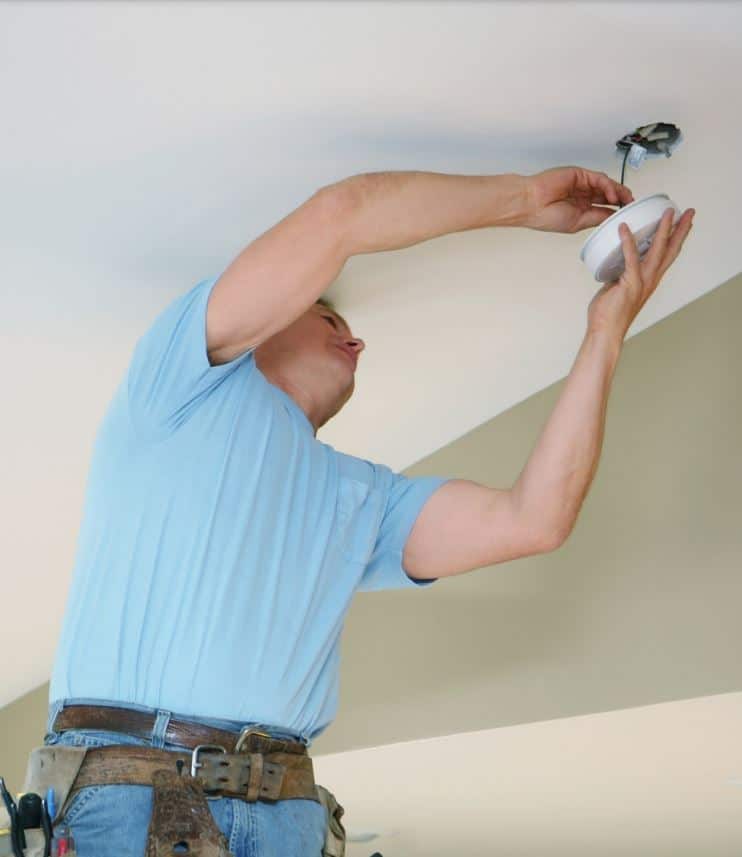
Smoke alarms Sunshine Coast homes need by 1 January 2027
The Queensland Government says that by 1 January 2027, all existing private homes, townhouses, units and manufactured homes in Queensland must have interconnected photoelectric smoke alarms. Alarms must have no ionisation sensor, must comply with AS 3786:2014, and must all sound together. The official Queensland Government page has the rule, and our 2027 deadline explainer puts it in plain English.
How wireless interconnected alarms work
“Interconnected” simply means the alarms are linked. When one alarm senses smoke, it signals all the others, and every alarm in the home sounds. The Queensland Fire Department (QFD) explains why that matters: it gives you more time to escape, because everyone in the home is alerted, not just the person nearest the fire.
Older interconnected systems did the linking with cables run through the ceiling. Wireless alarms do it by radio signal instead. You pair the alarms with each other when you put them up, following the maker’s instructions, and from then on they work as one set.
“Photoelectric” is about how the alarm senses smoke. QFD describes it simply: photoelectric alarms detect smoke using a light sensor. The rule requires that type, and it rules out alarms with an ionisation sensor.
Power: why the battery can’t be removed
QFD says compliant alarms are powered either by a non-removable battery or by mains power. Wireless alarms use the battery: QFD describes it as a non-removable 10-year battery. You don’t change it during the alarm’s life, and you don’t have to remember a yearly battery swap.
When the alarm reaches the end of its life, the whole unit is replaced. That lines up with QFD’s advice to replace any alarm more than 10 years old. The date code on the label tells you where each alarm is up to.
Hardwired alarms are the other option, connected to 240V mains power. QFD says they must be installed by a qualified electrician, and if your current alarms are hardwired, the replacements must be hardwired too. RED’s R240RC is our model for hardwired homes.
What comes in a pack of smoke alarms Sunshine Coast customers order
Most homes need several alarms, so most people buy a multi-pack. Our multi-packs include free remote controllers and magnetic mounting plates along with the alarms. Wireless choices are:
- RED R10RF, RED’s wireless interconnected alarm.
- RED R10RFP, part of the RED Professional range.
- Emerald EVO10RF, Emerald’s wireless interconnected alarm, in the Emerald range.
RED also makes heat and carbon monoxide alarms, which we stock as extras alongside the smoke alarms. Every alarm is covered by the manufacturer’s warranty: RED gives 10 years from the date code, and Emerald gives up to 10 years from the date code. Browse everything in the shop.
Looking after your alarms once they’re up
QFD’s maintenance advice fits on a fridge magnet:
- Test every month. Press the test button and make sure every alarm in the home sounds, not only the one you pressed.
- Clean them. Clear away dust and insects with a vacuum or a soft brush.
- Keep them clear. Don’t block or cover them.
- Never paint over them.
If you rent your home out, the Residential Tenancies Authority (RTA) also asks tenants to test and clean the alarms at least once every 12 months and report problems, and asks owners or managers to test them within 30 days before a tenancy starts or is renewed. Our landlord guide has more.
Caravans and motorhomes
The rule isn’t only about houses. The Queensland Government says registered caravans and motorhomes must also be fitted with a photoelectric smoke alarm, and QFD says it goes on the ceiling.
If you own a registered caravan or motorhome, check it the same way you’d check your home: look for AS 3786:2014 on the label, check the date code, and press the test button. QFD says that from 1 July 2024, newly registered or transferred Queensland caravans and motorhomes must have compliant interconnected smoke alarms (QFD smoke alarm FAQ, fire.qld.gov.au, last updated 28 Oct 2026; checked 2 Nov 2026).
A home fire escape plan to go with your alarms
Alarms give the warning; a plan gets everyone out. QFD asks every household to make a home fire escape plan and practise it, so everyone in the home knows how to get out quickly, and to keep exits clear of clutter and trip hazards.
A simple plan covers two ways out of each room where possible, a safe meeting place outside, and who helps children or anyone who needs a hand. Walk it through together once your new alarms are tested, so everyone knows what the sound means.
Posting smoke alarms Sunshine Coast-wide
Standard Australia Post delivery takes 4 to 7 business days and costs $14.95, or is free on orders of $200 and over. Express takes 1 to 3 business days for $19.95. All prices include GST, and you can pay by card, PayPal, Klarna or Link. If you also have property in Brisbane or on the Gold Coast, see those pages, or the service areas page for every area we cover.
Frequently asked questions
Do wireless alarms need Wi-Fi?
No. “Wireless” here means the alarms talk to each other by their own radio signal, not through your home Wi-Fi.
Can I change the battery in a wireless alarm?
No. QFD describes the battery as non-removable and lasting 10 years. When it’s done, you replace the whole alarm.
Where do the alarms go?
QFD says in every bedroom, in every hallway or room connecting bedrooms, and on every storey of the home.
Do I need a smoke alarm in my caravan?
If it’s a registered caravan or motorhome, yes: the Queensland Government says it must be fitted with a photoelectric smoke alarm, and QFD says on the ceiling.
How often should I test my alarms?
QFD says every month.
This page is general information, not legal advice.
Sources
- Queensland Government, “Smoke alarms”: https://www.qld.gov.au/emergency/safety/fire/smoke-alarms (page last updated 29 Oct 2026; checked 2 Nov 2026)
- Queensland Fire Department, “Smoke alarm laws are changing in Queensland” fact sheet (QFE00206, 05/26): https://www.fire.qld.gov.au/sites/default/files/2026-06/Smoke-Alarm-Fact-Sheet.pdf (checked 2 Nov 2026)
- Residential Tenancies Authority, “Smoke alarm laws: what you need to know in Queensland”: https://www.rta.qld.gov.au/news/2020/08/12/smoke-alarm-laws-what-you-need-to-know-in-queensland (checked 27 Oct 2026)
- Manufacturer warranties: redsmokealarms.com.au/warranty and emeraldalarms.com.au/warranty (checked 2 Nov 2026)
Questions about smoke alarms on the Sunshine Coast?
Not sure which alarms suit your home, or how many you need? Tell us about your place through the contact page or call (07) 3155 5017, and we’ll help you choose. Browse the smoke alarm shop for wireless and hardwired alarms, delivered anywhere in Australia.